Drainage
Water control without guesswork
We design runoff paths so heavy rain does not damage foundations, pavements, or planted areas.
Drainage Diagnostic
We find where the water starts, where it slows down, and what it is damaging
Drainage work should not feel like a guess. We study the property during planning, identify water pressure points, and design a path that moves runoff away from surfaces, foundations, and planted areas.
Standing water near patios or entries
Mulch washout and bed erosion
Wet edges around walkways or walls
Foundation-side moisture concerns
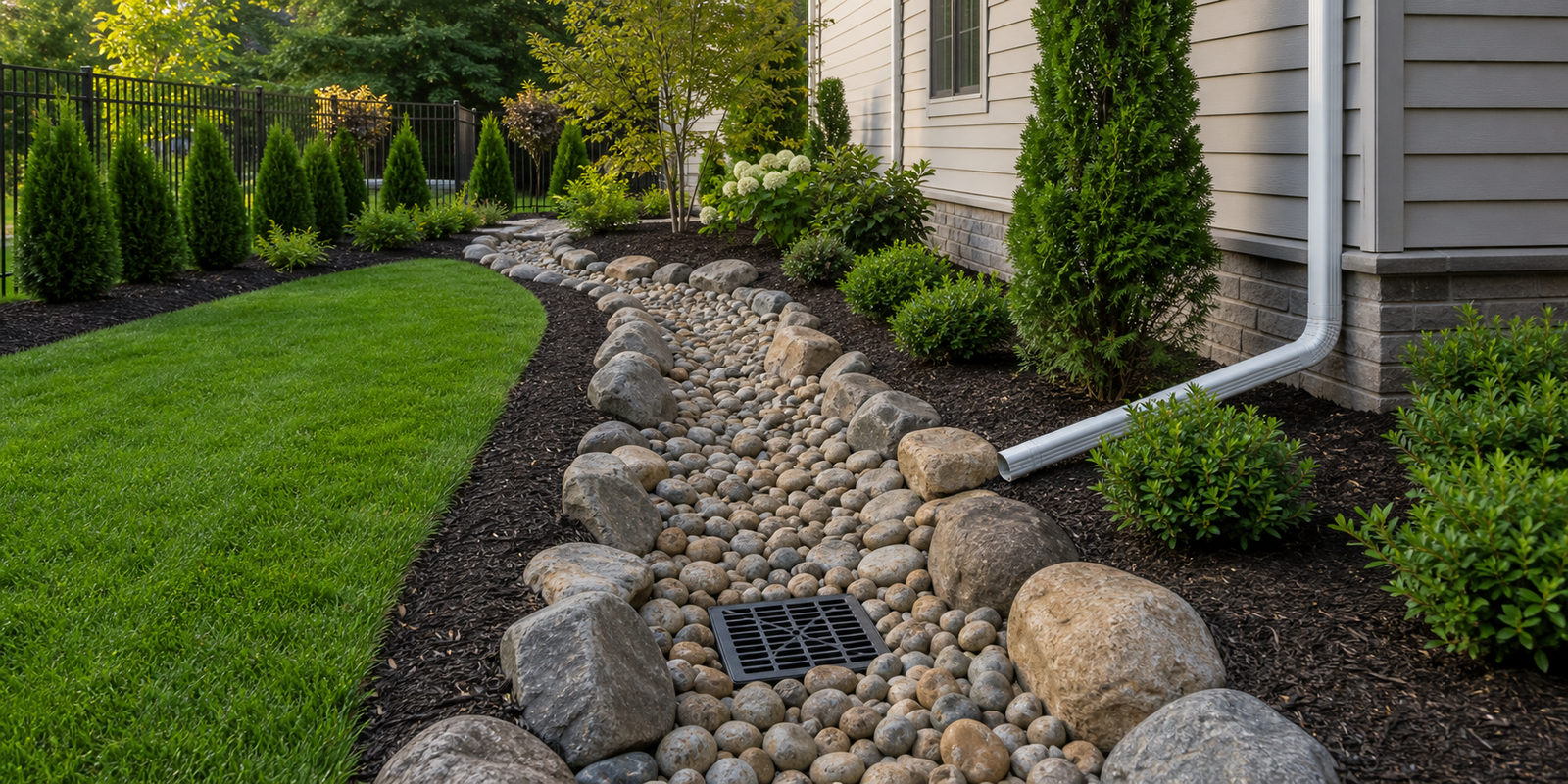
Warning signs
Small water issues usually become expensive surface problems when they are ignored.
Water sitting near steps after a storm
Mulch or soil washing into walkways
Soft lawn edges beside concrete
Foundation beds staying wet for days
Cracks appearing near low points
Functional strategy
Drainage integrated with finish surfaces
We design channels and slope corrections with concrete edges and planting edges considered together, so fixes do not just solve one problem and create another.
Client benefit: safer use after storms and fewer resurfacing callbacks.
Common project type
Patios with pooling after storms, entry-zone standing water, and joint wear from water stress.
What we include
Site measurements, construction plan, installation, and initial monitoring.
Main benefit
Less pavement damage, lower upkeep, and more reliable use during wet seasons.
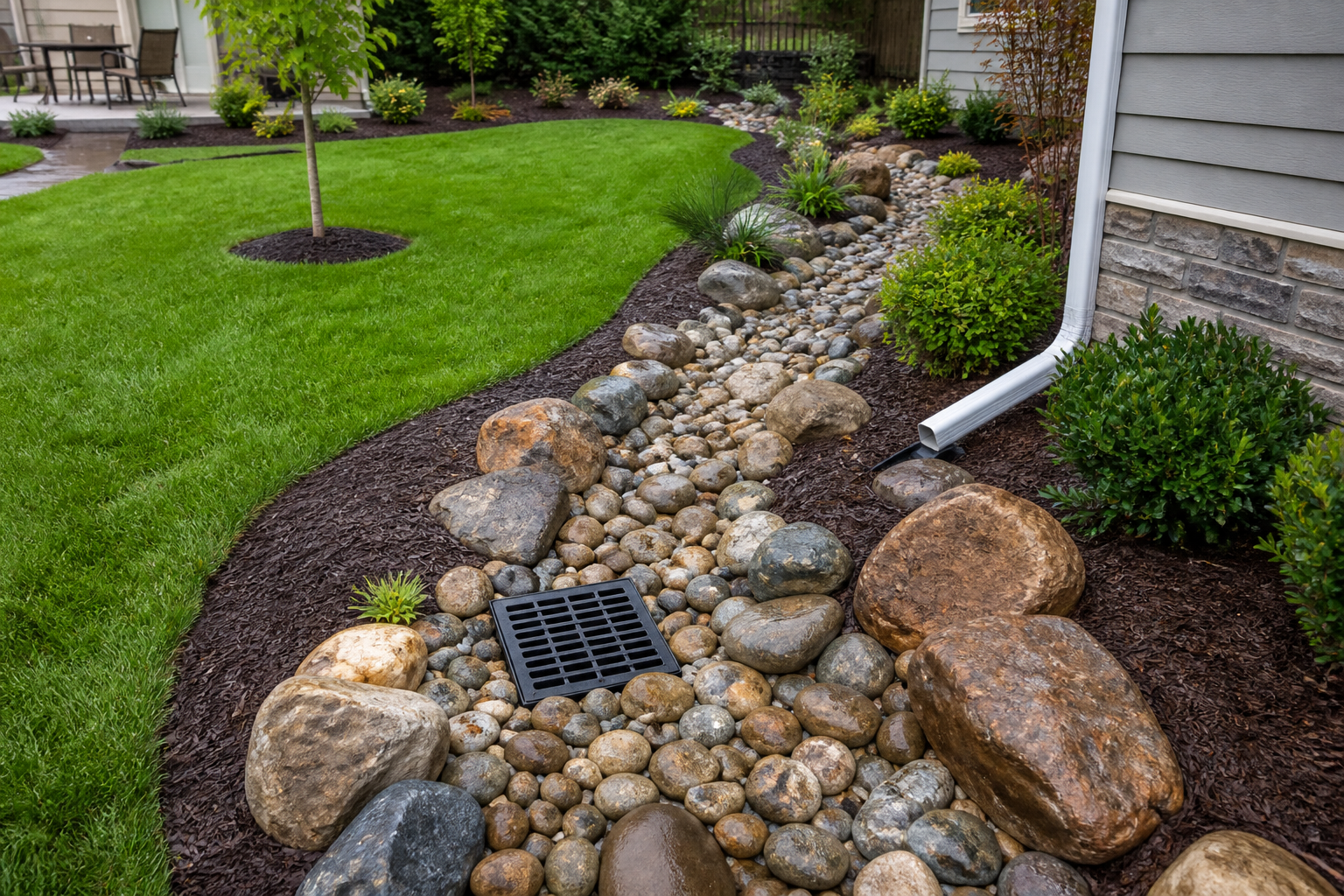
Pooling water at entry zones before intervention, showing where drainage pressure was affecting walkability and surface life.
Guided water flow through controlled channels that move runoff away from paths, planting beds, and sensitive hardscape edges.
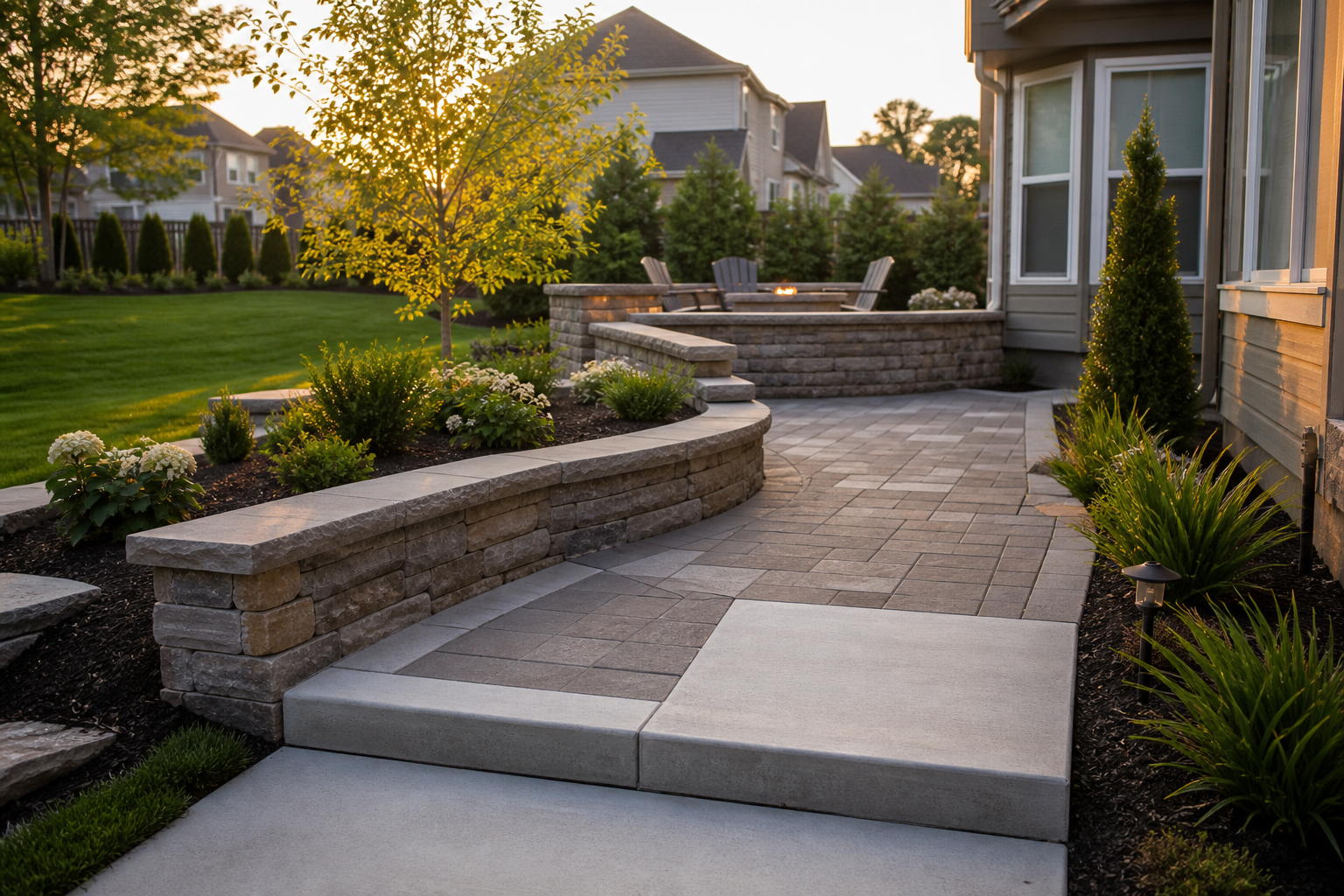
Reinforced wall detail to control erosion, stabilize grade changes, and protect the finished landscape during storms.
Drainage service depth
Detailed drainage planning
Flow path diagrams, grading revisions, and structural follow-up after rain events.
What we evaluate
- Elevation and low point mapping for each zone.
- Soil infiltration behavior and runoff intensity.
- Entryway protection and surface transition safety.
- Pump, channel, or trench adjustments where required.